PRODUCT DEVELOPMENT
The key details to confirm before your idea moves into production. A design brief is the beginning of a conversation; an approved sample is a shared reference for the finished result. Connecting the two requires clear measurements, identifiable materials and a written record of decisions.
Turn inspiration into a working brief
Collect a small set of useful references and explain what each one contributes. One image may show the silhouette, another the stitch texture and a third the desired color combination. Mark details that should not be copied as well as those that matter. This keeps a development sample focused on your product rather than on an ambiguous mood board.
For knitted accessories, include the intended wearer, wearing position, season and whether the piece belongs to a set. Show front and back views where relevant. Identify features such as stirrup openings, flared hems, contrast cuffs, labels, bows or other trims.
Make measurements repeatable
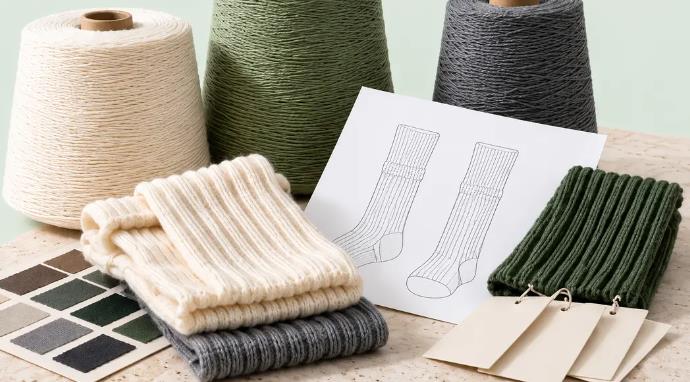
Create a measurement sheet with a drawing that shows exactly where each dimension is taken. State the unit and whether the product is measured flat, relaxed or stretched under an agreed method. For a leg warmer, useful points may include overall length, top opening, lower opening and the position of a decorative feature.
Agree on tolerances appropriate to the construction instead of inserting an arbitrary number into every field. If a fit requirement is difficult to describe, provide a reference sample and explain which characteristics are important. Include the intended range of fit rather than treating the phrase one size as a complete specification.
Identify materials and components
List the proposed yarn specification, fiber composition, colors, stitch references and trims. Assign a reference code to each item. An approved sample should be traceable to the material choices used to make it; a visual match alone does not explain which version was accepted.
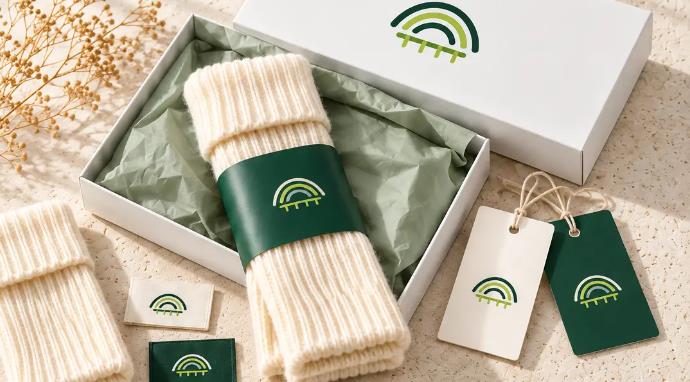
Keep packaging requirements in the brief from the start, even if the final artwork is not ready. A label position, a folded size or the way a pair is secured can affect how the finished item is reviewed and presented.
Review the sample in a consistent order
- Identify it: record the style code, sample date and version before reviewing details.
- Check construction: compare the shape, stitch, openings, seams, edges and trims with the brief.
- Measure it: use the agreed measurement points and record the results.
- Assess the experience: review fit, handle and the intended wearing or care checks.
- Check presentation: compare labels, folding and packing with the current requirements.
Photograph any issue with a clear reference point. A comment such as move the bow 2 cm toward the cuff is easier to act on when the same measurement point is marked on the photograph and drawing.
Keep revisions in one controlled record
Use a single comment sheet for each review round. Separate accepted details, required changes and open questions. Give the next sample a new version identifier and keep earlier comments available, so an approved detail is not accidentally changed during a later revision.
Before authorizing production, confirm which sample is the approved sample, who approved it and whether any exceptions remain. Record the agreed materials, colors, dimensions, trims, packaging and inspection requirements. Retain a reference sample or another agreed reference arrangement for subsequent checks.
Finish with a clear handover
An approved sample is not a substitute for the commercial agreement. Confirm the order quantity, color breakdown, price, delivery arrangements and required documentation separately. Any change after approval should be reviewed for its effect on the product and the agreed schedule.
Preparing a new knitted accessory? Send Qunfang Knitwear your references, measurement sheet and priorities. Discuss the available development options and confirm the sampling scope and terms for your project.