MATERIALS & SOURCING
Begin with texture, structure and the way your collection will be used. A useful yarn brief connects the look you want with a finished product that your customer will enjoy wearing. For leg warmers, arm warmers and other knitted accessories, start with the actual wearing experience rather than a fiber name alone.
Start with the collection, not a yarn card
Describe who the collection is for and how the pieces will be worn. Is the product a lightweight styling layer, a textured winter accessory or part of a coordinated set? Will it sit over tights, fit inside boots or be worn against bare skin? These questions give the sampling team a clearer starting point than a reference photograph on its own.
Record the intended silhouette, season, target price range and preferred care routine. Separate essential requirements from details that can change during development. If a soft hand feel is essential but the stitch pattern is flexible, make that priority explicit.
Compare yarns through matched swatches
Ask for the stated fiber composition, yarn specification and available color references for each candidate. Keep supplier codes with the samples so that similar-looking yarns do not become confused. Terms such as soft, chunky or premium should support a specification, not replace one.
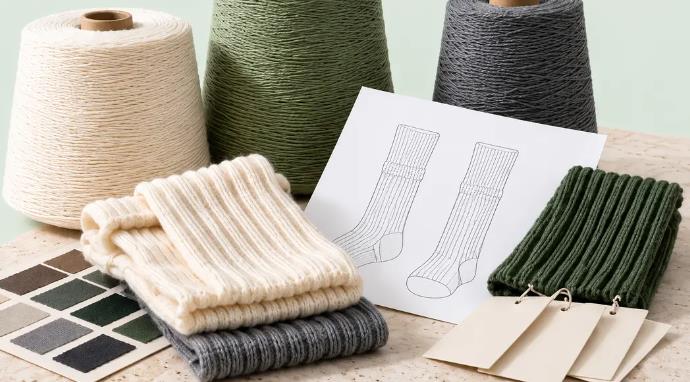
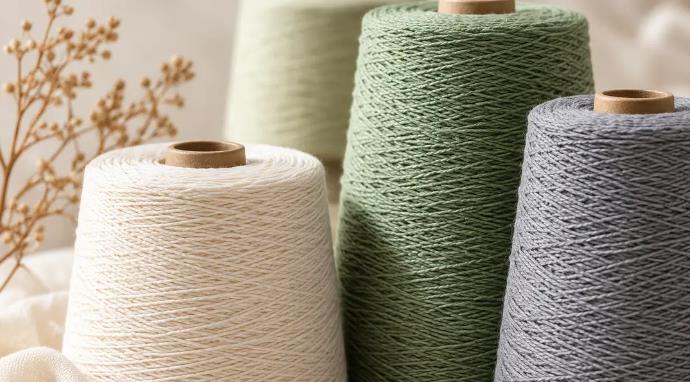
For yarn selection, request swatches that are as comparable as practical. Review them in the intended stitch and after the proposed finishing process. A cone, a small loose strand and a finished knitted panel are different reference points; use the panel to decide whether the proposed result matches your brief.
- Handle: compare the surface feel, softness and comfort of each sample.
- Appearance: examine stitch definition, surface texture and coverage when the knit is stretched.
- Shape: check the relaxed width, stretched fit and how the sample returns after handling.
- Construction: review cuffs, edges, joins and any decorative trims alongside the main knit.
Give color approval its own reference
Use photographs to communicate a direction, then agree on a physical color reference for approval. Label every submitted shade with its code and version. Review coordinated pieces together, especially when a collection combines contrast cuffs, stripes, bows or separate arm and leg warmers.
Keep the approved reference with the written sample comments. If a shade or yarn must change, ask for the alternative to be reviewed before it is used. This creates a clear record of what was accepted instead of relying on an old message or an unlabelled image.
Test the intended use before making a bulk decision
Build a review checklist around the product's likely use. It can include wear comfort, cuff pressure, stretch recovery, snagging, pilling, color transfer and dimensional change after the proposed care process. Agree on the test method and acceptance criteria with the relevant supplier or testing specialist rather than assuming that a visual inspection covers every requirement.
For products containing trims or multiple materials, review the complete construction. Confirm care instructions against the finished product and its supporting assessment, not simply the main yarn description.
A practical yarn selection brief
- Product reference, intended customer and wearing conditions.
- Preferred composition and any materials to exclude.
- Desired texture, stitch reference and finished dimensions.
- Color references and coordinated collection pieces.
- Target quantity, cost range and requested development schedule.
- Sample review criteria and the person responsible for approval.
Good yarn selection ends with an identifiable approved sample and a written specification. Keep both together so that later conversations about color, fit or finishing refer to the same standard.
Planning a knitwear collection? Share your product references and priorities with Qunfang Knitwear to discuss suitable options. Confirm material availability, sampling arrangements, order quantities and timing for the specific project before placing an order.